Autonomous cleaning has moved from novelty to genuine operational tool, and the choice of machine now matters as much as the decision to automate at all. If you manage a hotel, a hospital, a warehouse, or a campus, here is how to think through the decision without getting lost in spec sheets.
The most common mistake is to start with the robot. Teams see an impressive demonstration, fall for the hardware, then try to fit their space around it. The better order is the reverse. Start with your floors, your hours, and the result you actually need, then let those facts narrow the field for you.
Start with your floors and your footprint
The single biggest factor is what you are cleaning and how much of it. A robot built for open retail floors behaves very differently from one expected to weave between hospital beds at night. Map out your total cleanable area, the surface types involved, and the tightest spaces a machine will need to pass through.
Mixed flooring is where many deployments succeed or struggle. A space that combines hard floor and carpet needs a machine that can switch modes without a person intervening. Square footage then tells you how much coverage per charge you need, and how quickly the machine has to work to finish within your cleaning window.
A quick reference point
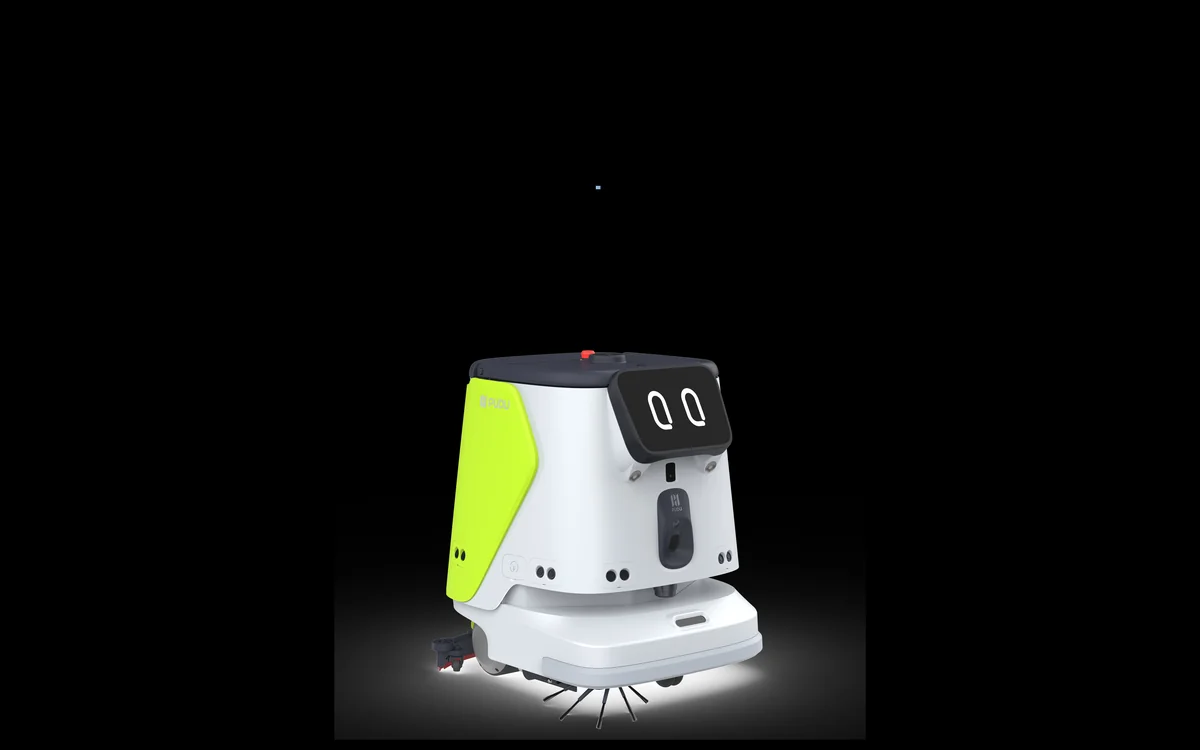
The PUDU CC1 Pro combines sweeping, scrubbing, dust mopping, and carpet vacuuming in one machine, covers 5,000 to 8,000 square meters per charge, and returns to a docking station that cleans itself between cycles. It is a useful benchmark when sizing what your space needs.
Autonomy is the real differentiator
Two robots can share a spec sheet and still differ enormously in how much staff time they consume. The questions that matter are practical ones. Does someone have to empty and refill it by hand every cycle? Does it need a person to start it, or does it run to a schedule? What happens when the battery runs low?
This is where a self-cleaning docking station changes the economics. A machine that refills its own water, drains its dirty tank, cleans its own brush and squeegee, and recharges without help can run overnight with no one present. That shift, from a tool someone operates to a system that simply runs, is usually where the labor savings come from.
Navigation and safety in a working space
A cleaning robot earns its place by working safely around people, not by avoiding them entirely. Look for machines that map a space without floor markers or QR codes, that detect both low and suspended obstacles, and that hold a safe clearance around staff and guests. The goal is a robot you can deploy in a live environment, not one that needs the building emptied first.
Ask how a navigation map is built and how long it takes, because that becomes part of your install. A precise map built on the first day is what lets a machine clean consistently every night afterwards.
The numbers that actually matter
Hardware specifications are easy to compare and easy to over weight. The numbers that decide whether a robot is worth it are the operational ones: hours of labor redirected each week, the cleaning window you need to hit, and the time to recover the investment.
Most operations finance their robots rather than buy outright, which means the real question is whether the monthly cost sits comfortably below the labor value the machine returns. A proper proposal should show that plainly, with pricing, the machine's specifications, and an honest return projection, so the decision is a financial one rather than a leap of faith.
If you can see the payback before you commit, you are choosing well. If you cannot, no spec sheet will make up the difference.
Frequently asked questions
How do I choose a commercial cleaning robot for my facility?
Match the robot to your floors, footprint, and cleaning window. Map your total cleanable area, the surface types involved, and the tightest spaces a machine will need to pass through. Mixed flooring is where many deployments succeed or struggle: a space combining hard floor and carpet needs a machine that can switch modes without staff intervening.
What makes one cleaning robot more autonomous than another?
Autonomy comes down to how much staff time the robot consumes. The key questions: does it need someone to empty and refill it every cycle, does it need a person to start it or does it run on a schedule, and what happens when the battery runs low? A self-cleaning docking station that refills water, drains dirty tanks, cleans its own brush, and recharges without help lets the robot run overnight with no one present.
What navigation features should I look for in a cleaning robot?
Look for machines that map a space without floor markers or QR codes, detect both low and suspended obstacles, and hold a safe clearance around staff and guests. Ask how a navigation map is built and how long it takes, because a precise map built on day one is what lets the machine clean consistently every night afterwards.
How do I calculate whether a commercial cleaning robot is worth the cost?
The numbers that matter are operational: hours of labor redirected each week, the cleaning window you need to hit, and the time to recover the investment. Most operations finance their robots, so the real question is whether the monthly cost sits below the labor value the machine returns. A proper proposal should show pricing, specifications, and an honest return projection so the decision is financial rather than a leap of faith.