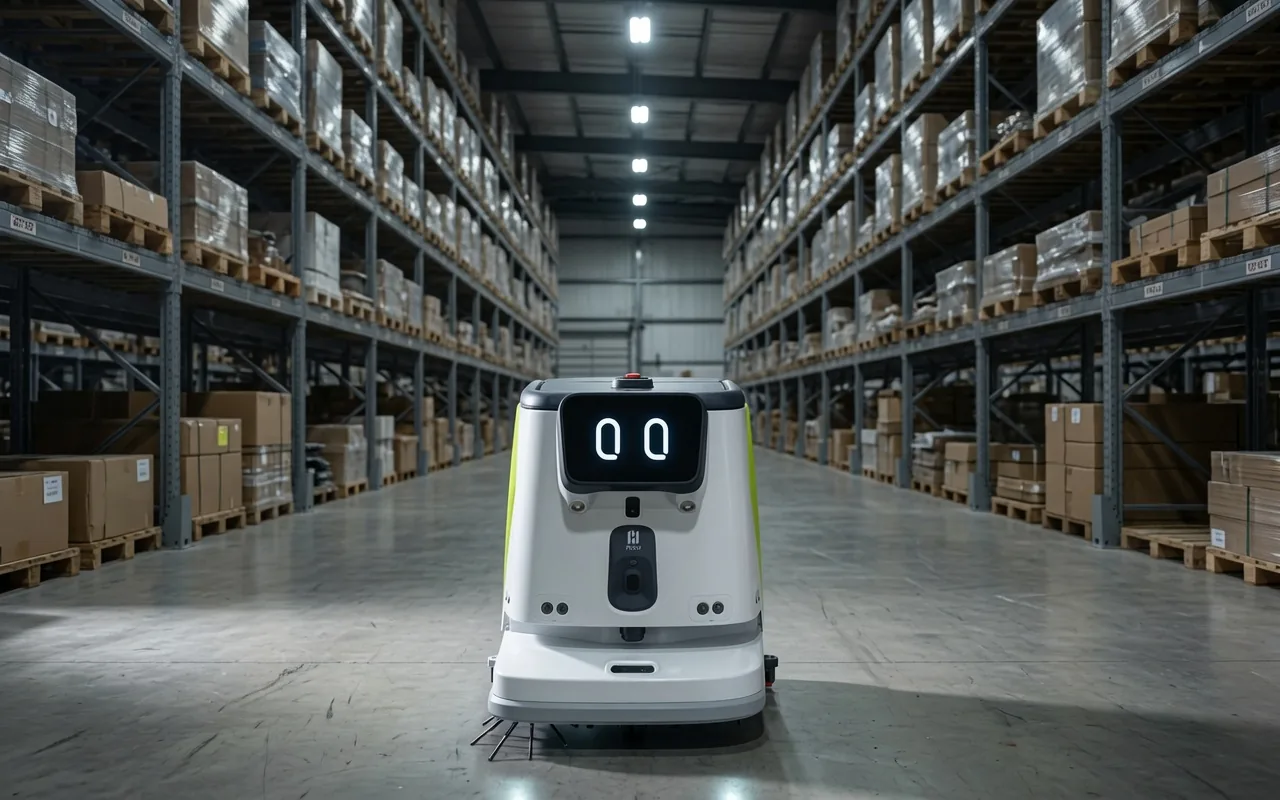
A warehouse cleaning robot solves a problem that is genuinely hard to staff: keeping large, busy logistics floors clean around the clock without pulling people off more valuable work. In high throughput environments, consistent floor care also protects the equipment that keeps the operation moving. Here is how autonomous cleaning fits a warehouse.
Why a warehouse cleaning robot earns its place in logistics
Dust and debris are not just cosmetic in a distribution center. Fine cardboard dust settles on scanners and sensors, and grit accelerates wear on the equipment that moves your goods. Keeping the floors consistently clean is part of keeping the operation reliable, not just tidy. The trouble is that manual crews struggle to scrub floors safely while a facility is running, which is exactly the gap a robot fills.
Working around the operation
A cleaning robot can run during quieter windows and navigate around obstacles and moving objects, holding a safe clearance as it goes. For best results in a busy facility, scheduling it for the calmer hours keeps it out of the heaviest traffic while still covering the ground that needs attention. It does the steady, repetitive floor work so your team stays focused on throughput.
The spare battery strategy
For sites that genuinely cannot pause, an additional battery removes the charging gap. When the robot runs low it returns to base, a team member swaps in a charged pack in a couple of minutes, and it carries on. The charging bottleneck simply disappears.
The zero downtime power option
A standard charge cycle takes a few hours, which in a triple shift operation is real lost time. The swappable battery approach treats power like a quick pit stop rather than a long rest. A charged battery slides in, the depleted one goes on to charge, and coverage stays continuous. For the highest volume sites this is often what makes around the clock cleaning practical.
Matching the machine to the floor
Large open warehouse floors suit different machines than mixed surface commercial spaces. We size the robot to the actual environment during the audit rather than assuming one model fits every site. For the labor side of the equation, our piece on the labor shortage covers why automating floor work helps most exactly where staffing is hardest, and the robots page lays out the range.
Frequently asked questions
How does a warehouse cleaning robot avoid forklifts?
It detects obstacles and moving objects and navigates around them, keeping a safe clearance. Set it to run during quieter windows for best results.
How long does charging take?
Around three hours. A spare battery keeps a continuous site running through the charge.